Topics in Algebra has been my favourite book to learn group theory from so far. So, I thought I would upload solutions to exercises that I do here!
Normal Subgroups and Quotient Groups
The section I have just looked at is Chapter 2, section 6, ‘Normal Subgroups and Quotient Groups‘. I give a brief overview of what is covered.
If we have a group 


It follows easily that 

From this we obtain nice results about the properties of cosets of normal subgroups. Indeed, one of the things that make them special is that every right coset is a left coset. There is a nice example of this given with 


Then we see how this means that 

I will show here questions 18,19 ,20 and 21 from the exercise section as I think the first three are nice together and the last has us prove a property about the quotient group.

So it seems that the property that there is an integer


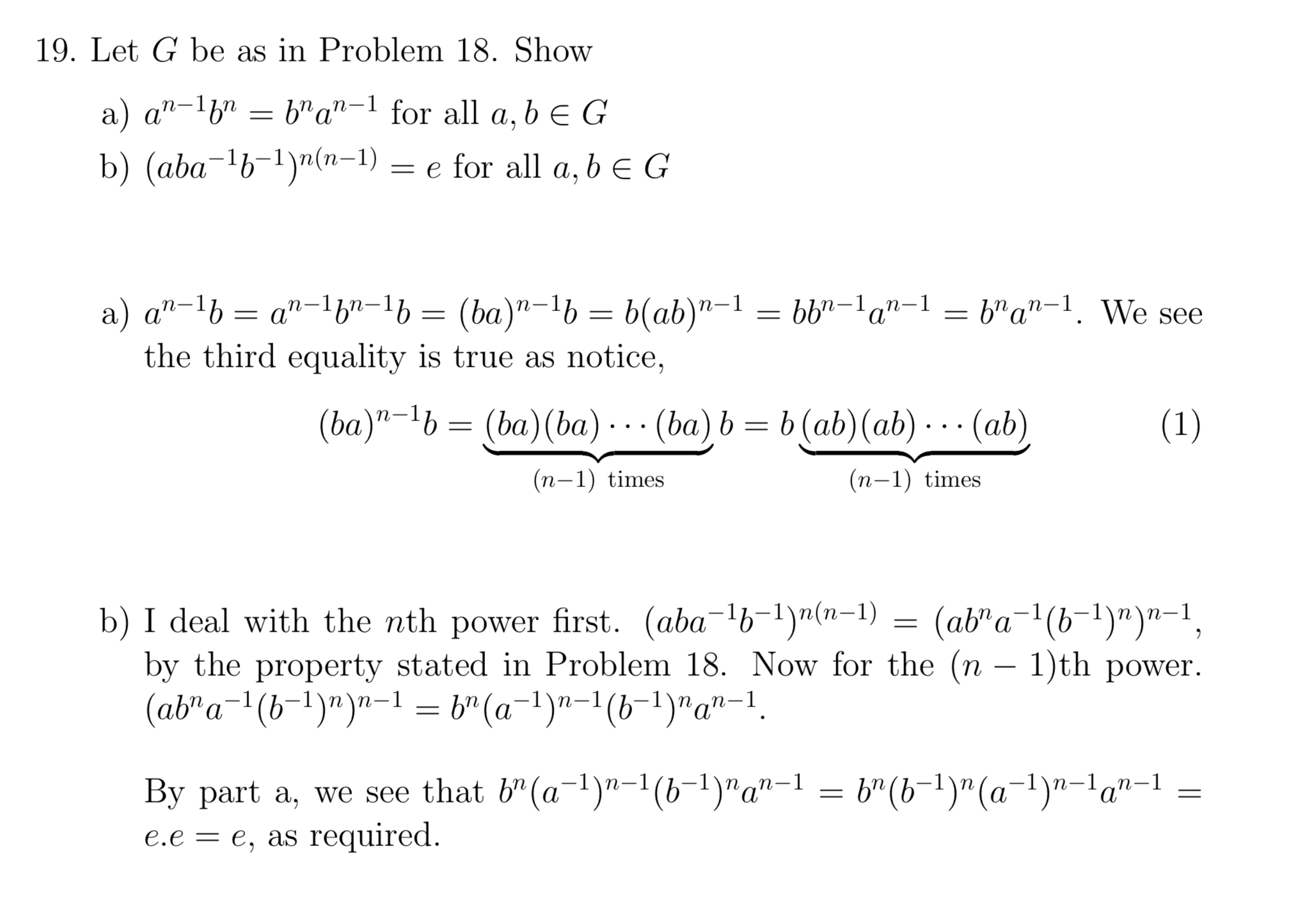
This is just some fiddly manipulation using facts that we already have known/used. Let me know if it would be better to include more detail!
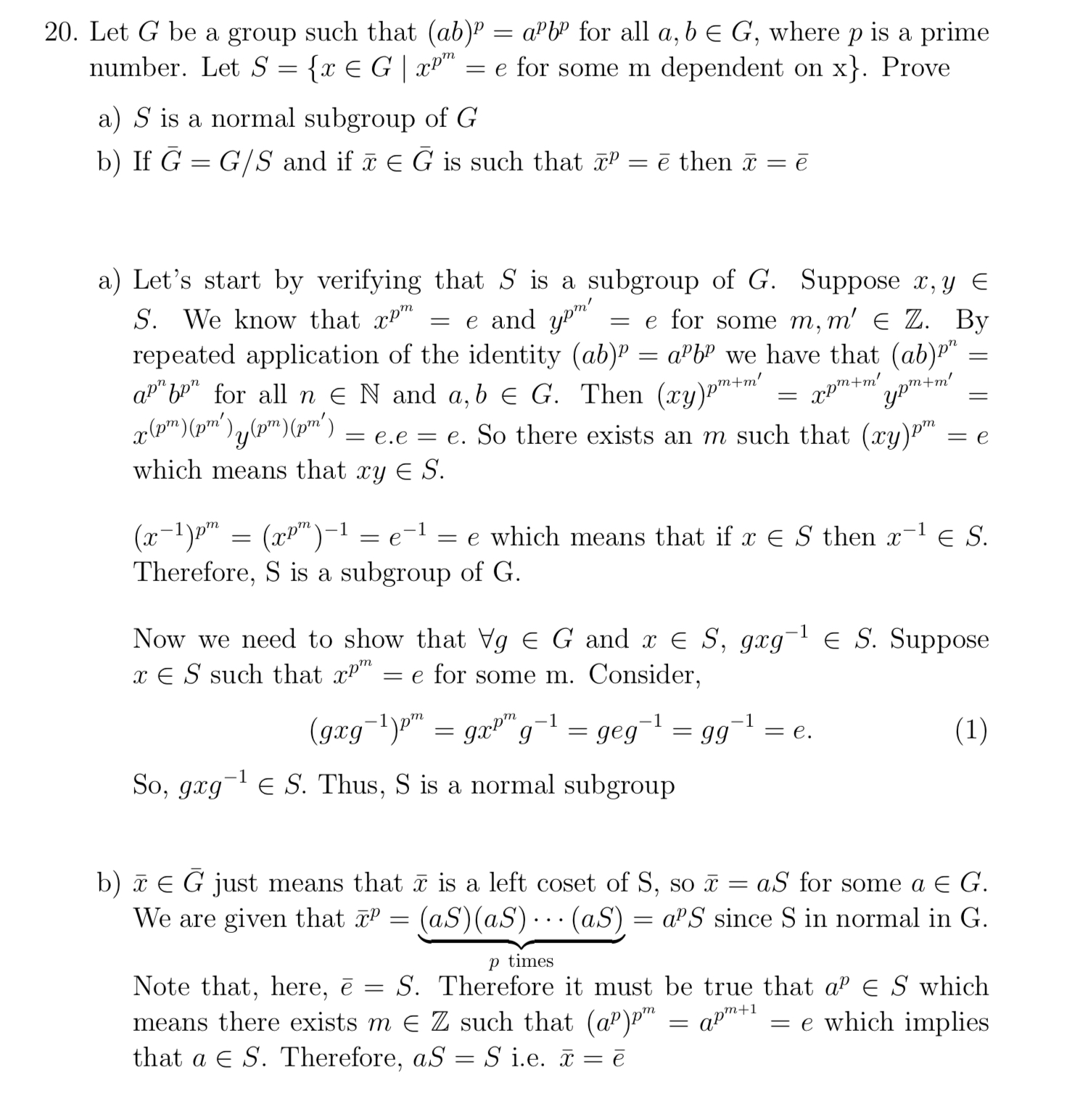
For Problem 20, I am wondering why I haven’t explicitly used the fact that p is prime so I must be missing something…
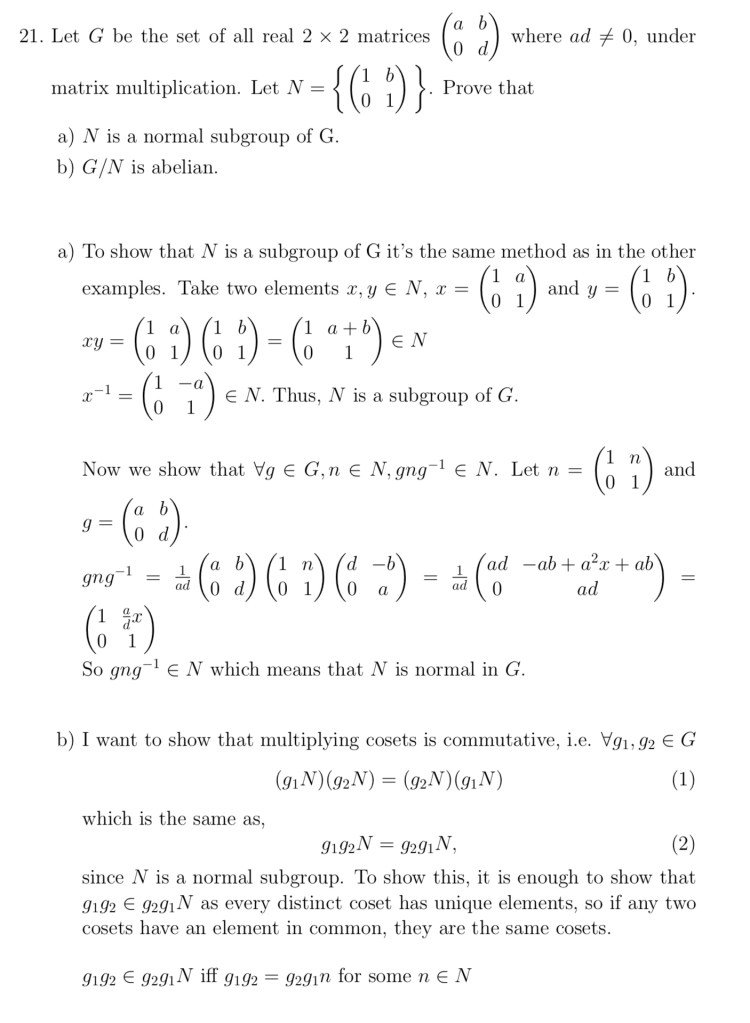
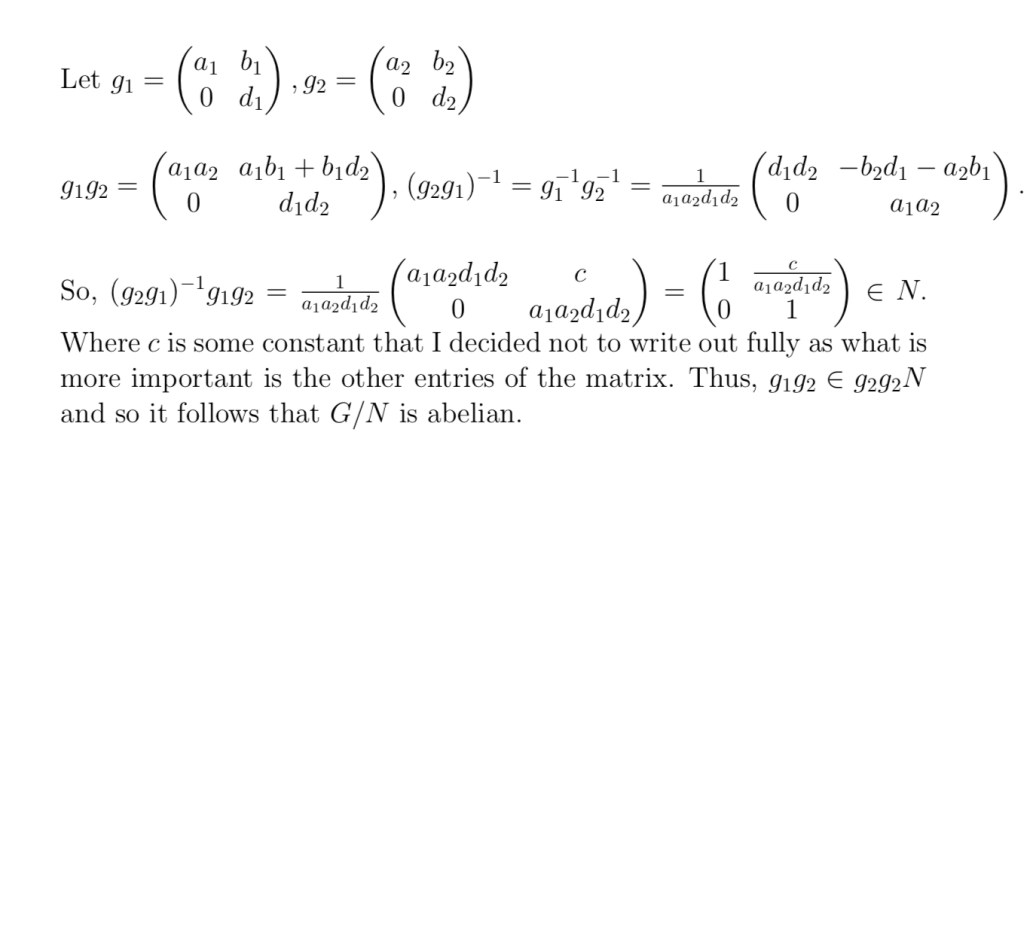
 Proof pending
Leave a comment